

LET’S GET STARTED
FROM LEARNING TO DOING
Now that you understand what affiliate marketing is and how it works, it is time to start building your own journey.
You do not need to know everything before you begin. You also do not need a big following, a perfect Instagram page or years of experience. The goal is to start with the basics and build everything step by step.
In this part of the course, I will show you what you need to do before you start promoting products and creating content. We are going to build the foundation first. Once your foundation is ready, creating content and promoting products will become much easier.
STEP 1 — CHOOSE YOUR NICHE
The first thing you need is a clear topic for your page. This is called your niche.
Your niche is simply the main topic you will talk about and create content about.
For example, your niche could be:
Beauty
Fashion
Fitness
Travel
Lifestyle
Business
Online Income
Personal Development
Technology
Food
You do not have to choose something just because you think it will make you money. Choose something you are interested in, enjoy learning about or can imagine yourself creating content about for a longer period of time.
If you choose a topic you hate, creating content can quickly become boring. But if you choose something you actually enjoy, it can be much easier to keep going and come up with new ideas.
WHY DOES YOUR NICHE MATTER?
Your niche helps people understand what your page is about.
Imagine someone finds your TikTok profile. They see one video about makeup, another about football, another about cars and another about making money.
They might think:
“What is this page actually about?”
Now imagine your page is mainly about beauty. You post beauty tips, product information, tutorials and your experiences.
Someone who is interested in beauty immediately understands why they should follow you.
A clear niche does not mean that every single post has to be exactly the same. You can still be creative and show different sides of your personality. Your niche simply gives your page a clear direction.
STEP 2 — THINK ABOUT YOUR AUDIENCE
After choosing your niche, think about the people you want to reach.
Don’t just think:
“I want everyone to see my content.”
Instead, ask yourself:
Who would actually be interested in what I am sharing?
For example, if your niche is beauty, your audience could be people who want makeup tips, skincare advice or new beauty products.
If your niche is fitness, your audience could be beginners who want simple workouts or healthy lifestyle ideas.
If your niche is online income, your audience could be beginners who want to learn about different ways to build an online income.
The more you understand your audience, the easier it becomes to create content that speaks to them.
STEP 3 — FIND PRODUCTS
Once you know your niche, you can start looking for products that fit your audience.
This is where affiliate marketing becomes practical.
You are looking for products or services that people in your niche might actually be interested in.
For example, if your niche is beauty, you could look for beauty products, tools, courses or services.
If your niche is fitness, you could look for fitness products, programs or other services related to your audience.
The most important thing is that the product should make sense for your page.
DON’T CHOOSE A PRODUCT ONLY FOR THE COMMISSION
One of the biggest mistakes beginners can make is choosing a product only because it has a high commission.
A high commission does not automatically mean that the product is good.
Before promoting something, ask yourself:
Is this useful?
Does it fit my niche?
Would my audience be interested in it?
Is the company trustworthy?
Do I understand what I am promoting?
Would I feel comfortable recommending it?
Your goal should not be to promote as many products as possible.
It is usually better to understand a few good products than to promote lots of random products that have nothing to do with your audience.
STEP 4 — SET UP YOUR AFFILIATE ACCOUNT
After choosing a product or affiliate program, you may need to create an account.
This depends on the program you choose.
You may need to enter your information, accept the program’s rules and wait for approval. Once you are accepted, you can usually access your affiliate area and find the products you are allowed to promote.
You will then be able to get your personal affiliate link.
Later in this course, I will show you how this works in practice and I will also show you the platform I personally started with.
STEP 5 — BUILD YOUR SOCIAL MEDIA PAGE
Now that you have a direction, it is time to create your online presence.
For this course, we will mainly focus on TikTok and Instagram.
You can use these platforms to create content, reach new people and build an audience around your niche.
You do not need thousands of followers before starting.
You can start with zero followers.
Your first goal is simply to create a professional page and start learning.
YOUR USERNAME
Your username should be simple and easy to remember.
You can use your name, your niche or a combination of both.
For example:
gamze.marketing
gamzewithbusiness
You do not need a complicated username. Try to choose something that you can use for a long time.
YOUR PROFILE PICTURE
Your profile picture is another important part of your page.
You can use a clear photo of yourself if you want to build a personal brand.
You can also use a simple professional logo or another image that fits your page.
The most important thing is that it looks clear and professional, even when it appears as a very small circle.
YOUR BIO
Your bio should quickly explain what your page is about.
Someone should be able to visit your profile and understand your content within a few seconds.
For example:
Learning affiliate marketing
Sharing tips & my journey
Helping beginners get started
You can change your bio later as your page grows.
Don’t spend hours trying to make it perfect.
Your bio can always be improved.
STEP 6 — GET READY TO CREATE CONTENT
Now you have your niche, your audience, your affiliate direction and your social media page.
The next step is content.
This is where many beginners become nervous.
They think:
“What am I supposed to post?”
“What if nobody watches?”
“What if my video is bad?”
Don’t worry.
Your first videos are not supposed to be perfect.
You are learning.
The more content you create, the more comfortable you will become.
YOU DON’T HAVE TO SHOW YOUR FACE
If you are not comfortable showing your face, that’s okay.
You can create content using:
Videos
Photos
Text
Screen recordings
Voiceovers
Slideshows
Animations
Later in the course, I will show you different ways to create content, including content where you don’t have to show your face.
STEP 7 — DON’T FOCUS ONLY ON SALES
When you first start creating content, don’t make every video about selling something.
People don’t want to see:
“BUY THIS!”
in every video.
Instead, give people a reason to follow you.
Teach them something.
Answer questions.
Share useful tips.
Tell your story.
Show what you are learning.
Explain problems and solutions.
Make content that your audience actually wants to watch.
When people trust your content, they may become more interested in the products you recommend.
STEP 8 — TEST AND LEARN
Not every video will perform the same.
One video might get 200 views.
Another might get 2,000.
Another might get 20,000.
This doesn’t mean you should give up when one video doesn’t perform well.
Look at what happened.
What was the topic?
What was the first sentence?
What type of video was it?
Did people comment?
Did people visit your profile?
Did anyone click your link?
These numbers can help you understand what your audience likes.
YOUR FIRST GOAL
Your first goal is not to make thousands of euros.
Your first goal is to get started.
Create your page.
Choose your niche.
Learn about affiliate products.
Create your first piece of content.
Post it.
Learn from the result.
Then create another one.
You are building a skill.
And just like any other skill, you become better by practicing.
MY ADVICE TO YOU
When I started learning affiliate marketing, I also had to figure things out step by step.
I learned how the platforms worked, how affiliate links worked, how to create content and how to communicate with people who were interested.
Over time, I reached a point where I even received my own discount code that I could share with customers.
That was an exciting moment for me because it showed me that I was moving forward in my affiliate marketing journey.
I want you to remember that when you start, you might not see big results immediately.
That is okay.
You are building your knowledge first.
You are learning how everything works.
You are creating your first content.
You are finding out what your audience likes.
And you are improving with every step.
YOUR FIRST MISSION
Before moving to the next lesson, take some time to think about your starting point.
Choose your niche.
Think about your audience.
Create your social media account.
Choose a username.
Set up your profile.
Write your bio.
And most importantly:
Don’t wait until everything is perfect.
Start with what you have and improve as you go
CHOOSE YOUR NICHE
WHAT IS A NICHE?
A niche is simply the main topic you want your page to be about.
Think of it as the main subject of your content. It helps you know what to post, what products to look for and what type of people you want to reach.
For example, you could choose:
Beauty
Fashion
Fitness
Travel
Lifestyle
Business
Online Income
Personal Development
Technology
You don’t need to be an expert. You just need a topic that you can learn about and create content around.
WHY IS A NICHE IMPORTANT?
Without a clear topic, your page can become confusing.
Imagine following someone because they post about beauty. Then suddenly they post about cars, football, cooking and online income. You might not know what their page is actually about.
A clear niche makes your page easier to understand.
It also makes it easier to find the right products and create content for people who are actually interested in what you share.
CHOOSE SOMETHING YOU LIKE
One of the easiest ways to choose a niche is to think about things you already enjoy.
Ask yourself:
What do I like?
What do I spend time watching online?
What could I talk about for a long time?
What do I enjoy learning about?
What kind of content do I naturally watch on TikTok or Instagram?
You don’t need to know the answer immediately.
Take your time.
DON’T CHOOSE ONLY FOR MONEY
It’s easy to think:
“Which niche will make me the most money?”
But this shouldn’t be your only question.
If you choose a topic only because you think it will make money, you might lose interest quickly.
Creating content takes time. You may need to make many videos before you understand what works for you.
Choosing something you actually like can make the process much easier.
YOUR NICHE CAN BE BROAD OR SPECIFIC
You can start with a broad topic and make it more specific later.
For example:
Beauty → Skincare → Skincare for beginners
Or:
Fitness → Home workouts → Home workouts for beginners
Or:
Fashion → Women’s fashion → Affordable outfit ideas
The more specific your topic becomes, the easier it can be to understand who your content is for.
But don’t make your niche so specific that you run out of things to talk about.
You need enough space to create many different pieces of content.
YOUR NICHE + YOUR AUDIENCE
Your niche and your audience go together.
If your niche is skincare, you might create content for people who want to improve their skincare routine.
If your niche is fitness, you might create content for beginners who want to become more active.
If your niche is online income, you might create content for people who want to learn about different ways to make money online.
Start thinking about one person who would enjoy your content.
What do they want?
What problems do they have?
What questions do they ask?
What would they like to learn?
These questions will help you later when we start creating content.
WHAT IF YOU HAVE NO IDEA?
That’s completely normal.
You don’t have to know your perfect niche on the first try.
Start by writing down 3–5 topics that interest you.
For example:
- Beauty
- Fashion
- Lifestyle
- Business
- Fitness
Then think about which one you could create the most content about.
Which one would you enjoy talking about?
Which one has products or services that could fit your audience?
Which one would you still enjoy after making 20 or 30 videos?
YOUR NICHE CHECKLIST
Before choosing your niche, ask yourself:
☐ Do I like this topic?
☐ Can I create lots of content about it?
☐ Are there people interested in it?
☐ Are there products I could potentially promote?
☐ Can I imagine myself talking about this for a few months?
If most of your answers are yes, you may have found a good starting point.
YOUR TASK
Now it’s your turn.
Write down 3 topics you are interested in.
Then choose the one that feels the most natural to you.
You don’t have to get it perfect.
Your niche is a starting point, not a life-long decision.
You can learn, test and change your direction later if you discover that another topic suits you better.
YOUR FIRST DECISION
What will your page be about?
Write down your niche before moving to the next lesson.
Once you have your niche, we can move on to finding the right affiliate products for your audience.
FIND THE RIGHT PRODUCT
WHAT IS AN AFFILIATE PRODUCT?
An affiliate product is a product or service that you can recommend to other people and potentially earn a commission from when they make a qualifying purchase through your affiliate link.
Once you know your niche, you can start looking for products that fit that niche.
For example, if your niche is beauty, you could look for beauty products, courses, tools or services.
If your niche is fitness, you could look for fitness programs, equipment, apps or other useful products.
The most important thing is that the product should make sense for the people who follow you.
DON’T JUST PICK THE HIGHEST COMMISSION
A common beginner mistake is looking at the commission first.
You might see one product offering €100 per sale and another offering €20 and immediately think the €100 product is better.
But that’s not always true.
A product with a high commission is not useful if nobody in your audience wants it.
Instead, look at the whole picture.
Ask yourself:
Is the product useful?
Does it fit my niche?
Would my audience be interested?
Is the price reasonable for the audience?
Does the product page explain everything clearly?
Do I understand what I am promoting?
Would I feel comfortable recommending it?
THINK ABOUT YOUR AUDIENCE
Always ask yourself:
“If I were my audience, would I actually want this?”
Imagine your page is about skincare.
You find an expensive business course that gives a very high commission.
Even if the commission looks attractive, it doesn’t make much sense for a skincare audience.
Instead, a skincare product, skincare guide or beauty-related service may fit your audience much better.
Your product should match the people you are trying to reach.
CHECK THE PRODUCT BEFORE PROMOTING IT
Before you share anything, take some time to understand the product.
Look at what it offers.
Read the description.
Check the price.
Understand who it is made for.
Look at the company behind it.
Read the affiliate rules.
Understand how the commission works.
You should know what you are recommending before asking someone else to consider buying it.
DON’T PROMOTE EVERYTHING
You don’t need ten different affiliate products.
You don’t even need five.
When you’re starting, it can be easier to focus on one product that fits your niche well.
This gives you more time to understand the product and create different types of content around it.
For example, instead of promoting five random products, you could create several pieces of content around one product:
What is it?
Who is it for?
How does it work?
What problem does it solve?
What are its main features?
What should beginners know?
What questions might people have?
One product can give you many content ideas.
BE HONEST
This is very important.
Don’t tell people that a product will definitely change their life.
Don’t promise guaranteed results.
Don’t make up reviews.
Don’t create fake screenshots.
Don’t say you personally used a product if you haven’t.
If you earn a commission from a recommendation, be transparent about your affiliate relationship when required.
Your goal is to build long-term trust, not make one quick sale.
YOUR PRODUCT CHECKLIST
Before choosing a product, ask yourself:
☐ Does it fit my niche?
☐ Would my audience want it?
☐ Does it solve a problem or provide value?
☐ Do I understand the product?
☐ Is the company trustworthy?
☐ Is the price suitable?
☐ Do I understand the commission?
☐ Do I feel comfortable recommending it?
If most of your answers are yes, you can consider it as a possible product to promote.
YOUR TASK
Now take your niche from the previous lesson.
Write down 3 products or services that could fit your audience.
Don’t choose them only because of the commission.
Think about your audience first.
Because the goal isn’t:
“How can I sell anything?”
The goal is:
“How can I recommend something useful to the right people?”
HOW TO FIND AFFILIATE PROGRAMS
FIND A PROGRAM THAT FITS YOU
Now that you know your niche and what type of product you want to promote, the next step is finding an affiliate program.
An affiliate program is a system that allows you to promote a product or service and earn a commission when someone buys through your affiliate link.
There are many different affiliate programs. Some are created directly by companies, while others are available through affiliate platforms.
You do not need to join every program you find. The goal is to find programs that fit your niche, your audience and the type of content you want to create.
WHERE CAN YOU FIND AFFILIATE PROGRAMS?
There are different ways to find affiliate programs.
You can:
- Search for companies in your niche
- Check if a company has an affiliate program
- Use affiliate platforms
- Search for products you already know
- Look at programs used by other creators
- Check the company’s website
For example, if your niche is beauty, you can search for beauty brands that offer affiliate programs.
If your niche is fitness, you can look for fitness products, programs or services that allow affiliates.
CHECK THE PROGRAM BEFORE YOU JOIN
Before you start promoting a product, take some time to understand the program.
Look at:
Commission
How much can you earn from a sale?
Cookie period
How long can your affiliate link track a customer?
Payment
How and when do affiliates get paid?
Rules
What are you allowed and not allowed to do?
Product
Is the product actually useful and suitable for your audience?
Requirements
Does the company have any rules for joining?
Understanding these things before you start can help you avoid problems later.
DON’T ONLY LOOK AT THE COMMISSION
A high commission can look attractive, but it should not be the only thing you look at.
Imagine you find two products.
One gives you a high commission, but you do not understand the product and it does not fit your audience.
The other gives you a smaller commission, but it fits your niche and is something your audience actually wants.
The second product may give you a better opportunity to create useful content around it.
Always think about the product first and the commission second.
CREATE YOUR AFFILIATE ACCOUNT
Once you find a program you want to join, you usually need to create an account.
You may need to provide:
- Your name
- Your email
- Your social media pages
- Information about your content
- Payment information
Some programs approve you immediately. Others may review your application first.
Once you are accepted, you can usually access your affiliate dashboard.
YOUR AFFILIATE DASHBOARD
Your dashboard is where you can find important information about your affiliate activity.
Depending on the platform, you may see:
Your affiliate links
The links you use to promote products.
Clicks
How many people clicked your link.
Sales
How many purchases were made through your link.
Commission
How much you earned from those sales.
Your results
Information that helps you understand how your promotions are performing.
This information can help you learn what type of content works best for you.
MY EXPERIENCE
When I started learning affiliate marketing, I also had to learn how affiliate programs, links and commissions worked.
I started by learning how to choose products, how to promote them and how to create content around them.
Later in my journey, I also received my own discount code that I could share with customers.
This was an exciting moment for me because I could give people a personal code while also connecting them with the product I was promoting.
I want to show you these parts of my journey throughout this course so you can see how the things you are learning can look in real life.
Your journey will be your own, and your results may be different.
YOUR TASK
Before moving on, find 3 affiliate programs that could fit your niche.
For each one, write down:
- What is the product?
- Who is it for?
- What is the commission?
- How does the affiliate link work?
- What are the program rules?
- Would you feel comfortable recommending it?
Don’t rush this step.
Choosing the right program can make creating content much easier.
YOUR AFFILIATE LINK
YOUR LINK IS YOUR CONNECTION
Once you join an affiliate program, you will usually receive a special affiliate link.
This link is connected to your affiliate account. When someone clicks your link and makes a purchase, the system can track that purchase and, depending on the program rules, you may receive a commission.
HOW DOES IT WORK?
The process is simple:
1. Choose a product
Find a product that fits your niche and audience.
2. Join the affiliate program
Create your account and get approved if approval is required.
3. Get your affiliate link
Find the product inside your affiliate dashboard and create or copy your link.
4. Share your link
You can place it where your audience can easily find it, depending on the platform’s rules.
5. Create content
Make videos, posts, slideshows or other content around the product.
6. People click
Interested people can visit the product through your link.
7. A purchase can happen
If someone buys through your link and the purchase meets the program’s rules, you may receive a commission.
WHERE CAN YOU SHARE YOUR LINK?
Depending on the platform and affiliate program, you may be able to share your link through:
- Your social media bio
- Link-in-bio pages
- Content descriptions
- Stories
- Websites
- Other places allowed by the affiliate program
Always check the rules before sharing your link.
DON’T SPAM YOUR LINK
Having an affiliate link does not mean you should send it to everyone.
Instead, create content that gives people a reason to be interested.
For example:
Don’t just say:
“Buy this product. Link in bio.”
Try:
“Here are 3 things I like about this product and why I think it can be useful for beginners.”
Your goal is to create useful content first and promote second.
IMPORTANT: TRACK YOUR RESULTS
Once you start sharing your link, pay attention to your results.
You may be able to see:
Views → Profile visits → Link clicks → Sales → Commission
This helps you understand what is happening between your content and your results.
If a video gets many views but very few link clicks, you can test a different call to action.
If people click your link but nobody buys, you can look at the product, your audience and the type of content you are creating.
You are not just posting.
You are testing, learning and improving.
YOUR FIRST LINK TASK
Now it’s your turn.
Find one product from your chosen affiliate program and:
- Open your affiliate dashboard.
- Find the product.
- Create or copy your affiliate link.
- Save the link somewhere safe.
- Think about where you want to share it.
- Write down 3 content ideas for that product.
HOW TO CREATE CONTENT
CONTENT IS HOW PEOPLE FIND YOU
Now that you have your niche, your product and your affiliate link, it is time to create content.
Your content is what helps people discover your page.
You do not need expensive equipment, a professional camera or a perfect setup.
You can start with your phone.
WHAT SHOULD YOU POST?
Your content should be connected to your niche and the product you want to promote.
You can create different types of content, such as:
- Tips
- Tutorials
- Mistakes
- Problems and solutions
- Product recommendations
- Before and after
- Lists
- Stories
- Personal experiences
- Educational videos
- Product demonstrations
- Reviews
- Slideshows
The goal is to give people a reason to stop, watch and learn something.
YOU DON’T HAVE TO SHOW YOUR FACE
A lot of beginners think they need to show their face to grow online.
You don’t.
You can create faceless content using:
- Text on videos
- Product videos
- Screen recordings
- Stock videos
- Photos
- Slideshows
- Voiceovers
- AI voiceovers
- Animations
- Tutorials
- Screen tutorials
This means you can start even if you are not comfortable being on camera.
THE FIRST 3 SECONDS MATTER
People scroll very quickly.
That is why the beginning of your content is important.
The first part of your video should make someone want to keep watching.
This is called a hook.
SIMPLE HOOK EXAMPLES
“3 things I wish I knew before starting…”
“If you are a beginner, watch this.”
“Nobody told me this about…”
“Stop making this mistake…”
“Here is how I…”
“Want to learn how to…”
Keep your hooks short and easy to understand.
GIVE VALUE
One of the biggest mistakes beginners make is talking about the product in every post.
Instead of always saying:
“Buy this product.”
Try to teach something.
For example, if your niche is skincare, you could make a video about:
“3 skincare mistakes beginners make.”
At the end, you can mention the product that fits the topic.
This makes the content feel more natural and useful.
USE A SIMPLE CONTENT STRUCTURE
You can use this structure for many of your videos:
1. HOOK
Get attention.
2. VALUE
Teach something or solve a problem.
3. PRODUCT
Show how the product can help.
4. CTA
Tell people what to do next.
For example:
HOOK:
“Struggling with dry skin?”
VALUE:
“Here are 3 simple things you can do.”
PRODUCT:
“One product I personally like for this is…”
CTA:
“Check the link in my bio if you want to learn more.”
YOUR CONTENT DOES NOT HAVE TO BE PERFECT
Your first video might not get many views.
That is completely normal.
Your first post is not supposed to be perfect.
The more you create, the more you learn.
You will learn:
- What people like
- What people ignore
- Which hooks work
- Which topics get attention
- Which videos get clicks
- What you enjoy creating
Don’t wait until everything is perfect.
POST. LEARN. IMPROVE. REPEAT.
YOUR CONTENT TASK
Create your first 5 content ideas.
For each idea, write:
Hook:
What will make someone stop?
Value:
What will they learn?
Product:
What product could you naturally mention?
CTA:
What should they do next?
HOOKS, CAPTIONS & CTAs
MAKE PEOPLE STOP, READ & CLICK
Creating content is easier when you know what to say.
You don’t have to create a completely new idea every time you post. You can use simple hooks, captions and calls to action and change them to fit your niche.
WHAT IS A HOOK?
A hook is the first sentence or part of your content.
Its job is simple:
Make people want to keep watching.
EASY HOOKS
- “3 things you need to know about…”
- “If you’re a beginner, read this.”
- “I wish I knew this sooner.”
- “Stop doing this if you want to…”
- “Nobody talks about this…”
- “Here is how to…”
- “Before you buy this, watch this.”
- “This changed the way I…”
- “Want to learn how to…?”
- “Save this for later.”
- “You need to know this.”
- “Here are 3 simple tips for…”
- “If I had to start again, I would…”
WHAT IS A CAPTION?
A caption is the text you add to your post or video.
Your caption can explain your content, give extra information or encourage people to take action.
SIMPLE CAPTION EXAMPLES
Educational:
“Starting from zero? Here are a few simple things you should know before you begin.”
Personal:
“I started with no idea what I was doing. Learning step by step made everything easier.”
Product:
“Looking for a simple way to get started? Here is one option you can look into.”
Tip:
“Save this post so you can come back to it later.”
WHAT IS A CTA?
CTA means Call To Action.
It tells your audience what to do next.
Without a CTA, people may watch your content and simply scroll away.
SIMPLE CTAs
- “Follow for more.”
- “Save this for later.”
- “Comment below.”
- “Share this with a friend.”
- “Check the link in my bio.”
- “Learn more through the link in my bio.”
- “Click the link to learn more.”
- “Want to know more? Check my bio.”
- “Follow for more beginner tips.”
- “Comment ‘START’ if you want to learn more.”
DON’T USE THE SAME CTA EVERY TIME
You can change your CTA depending on your goal.
If you want followers:
“Follow for more tips.”
If you want comments:
“What do you think? Comment below.”
If you want saves:
“Save this so you don’t forget.”
If you want link clicks:
“Find out more through the link in my bio.”
HOOK + VALUE + CTA
A very simple content formula is:
HOOK → VALUE → CTA
Example:
HOOK:
“Want to start affiliate marketing but don’t know where to begin?”
VALUE:
“Start by choosing one niche, finding a product that fits your audience and creating useful content around it.”
CTA:
“Follow for more beginner-friendly tips.”
You can use this structure again and again.
YOUR CONTENT FORMULA
When you don’t know what to post, remember:
STOP → TEACH → HELP → CTA
Stop the scroll.
Teach something useful.
Help your audience solve a problem.
Then tell them what to do next.
YOUR TASK
Create 10 hooks for your niche.
Then create:
5 captions
5 CTAs
5 content ideas
You now have your first small content bank.
TIKTOK & PINTEREST
TWO PLATFORMS. MANY WAYS TO GROW.
TikTok and Pinterest work differently, but both can help you get your content in front of new people.
You do not need to use every social media platform.
For this course, we will mainly focus on TikTok and Pinterest.
PART 1 — TIKTOK
WHY TIKTOK?
TikTok is a short-video platform where people discover new content every day.
You can start with 0 followers and still create content that reaches people.
Your goal is not only to get views.
You want people to:
Watch → Visit your profile → Click your link → Learn more → Potentially buy
WHAT CAN YOU POST ON TIKTOK?
You can create:
- Faceless videos
- Product videos
- Slideshows
- Tutorials
- Tips
- Lists
- Screen recordings
- Storytelling videos
- Text-based videos
- Voiceovers
- Product demonstrations
You don’t need expensive equipment.
Your phone is enough to start.
YOUR TIKTOK PROFILE
Keep your profile simple.
USERNAME
Choose something easy to remember.
Examples:
@gamzemarketing
@gamzeonline
@learnwithgamze
PROFILE PHOTO
You can use:
- A clear photo of yourself
- A professional logo
- A simple brand image
BIO
Your bio should quickly explain what your page is about.
Example:
Helping beginners learn affiliate marketing
Simple tips + content ideas
Start here ↓
WHAT SHOULD YOU POST?
Try different types of content and see what your audience responds to.
For example:
Monday: Educational tip
Tuesday: List/slideshow
Wednesday: Product-related content
Thursday: Beginner tip
Friday: Story/personal experience
You don’t have to follow this exact schedule.
The important thing is to keep creating and testing.
PART 2 — PINTEREST
WHY PINTEREST?
Pinterest is different from TikTok.
People use Pinterest to search for ideas, inspiration and solutions.
This makes it useful for content that people may want to find again later.
You can create Pinterest content around your niche and connect it to your website, landing page or other allowed destination.
WHAT CAN YOU POST ON PINTEREST?
Pinterest content can include:
- Pin graphics
- Step-by-step guides
- Checklists
- Tips
- Infographics
- Product ideas
- Blog-style content
- Tutorials
- Inspirational posts
- Educational posts
You can create many of these without showing your face.
YOUR PINTEREST PROFILE
Your profile should make it clear what people can expect from you.
PROFILE NAME
Keep it simple and related to your niche.
PROFILE PHOTO
Use the same photo or logo as your other platforms if you want your brand to look consistent.
BIO
Tell people what they can find on your page.
Example:
Simple affiliate marketing tips for beginners.
Learn, create and grow online.
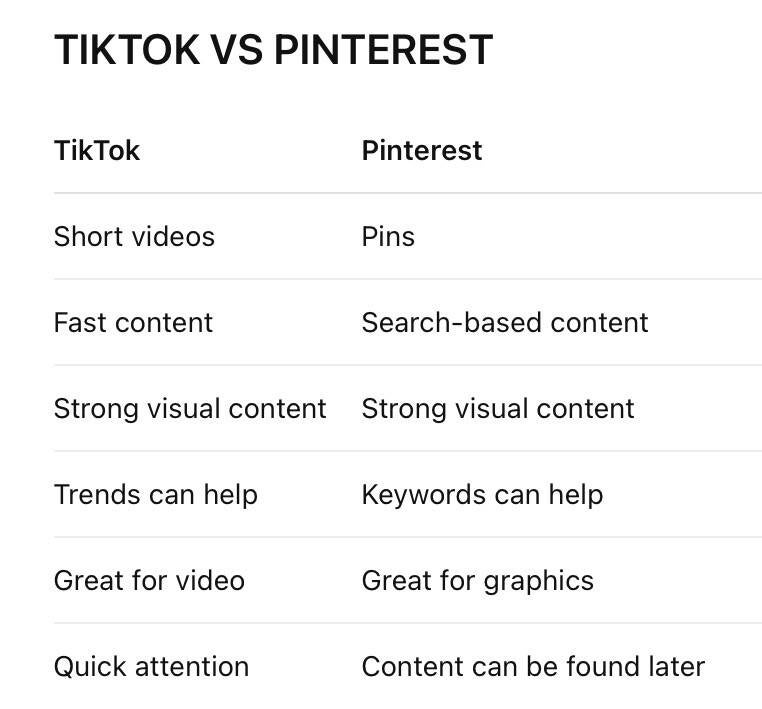
You don’t have to choose only one.
You can create one idea and turn it into different pieces of content.
For example:
TikTok:
“3 mistakes beginners make in affiliate marketing.”
Pinterest:
“3 Affiliate Marketing Mistakes Beginners Should Avoid”
Same idea.
Different platform.
YOUR CONTENT SYSTEM
Instead of creating completely new content every day, learn to reuse your ideas.
One topic can become:
1 TikTok video
↓
1 TikTok slideshow
↓
1 Pinterest Pin
↓
1 Pinterest checklist
↓
1 educational post
This saves time and gives you more content without starting from zero every time.
YOUR TASK
Choose 3 topics from your niche.
For each topic, create:
- 1 TikTok idea
- 1 TikTok hook
- 1 Pinterest Pin idea
- 1 Pinterest title
- 1 CTA
By the end of this exercise, you already have 6 pieces of content ready to create.
HOW TO GROW ON TIKTOK & PINTEREST
DON’T JUST POST. LEARN WHAT WORKS.
Growing online does not happen because of one perfect post.
It comes from creating content, testing different ideas and learning from what happens.
You do not need to go viral.
You need to understand what your audience likes and what makes them take action.
PART 1 — GROWING ON TIKTOK
1. START WITH A STRONG HOOK
The first seconds of your video are important.
Give people a reason to keep watching.
Instead of:
“Hi guys, today I want to talk about affiliate marketing…”
Try:
“Want to start affiliate marketing with no experience?”
Shorter and more direct.
2. KEEP YOUR VIDEOS SIMPLE
You don’t need a complicated video.
One video can have:
Hook → Tip → Example → CTA
For example:
Hook:
“3 mistakes beginners make with affiliate marketing.”
Tip:
“Don’t promote products you don’t understand.”
Example:
“Choose products that fit your niche and audience.”
CTA:
“Follow for more beginner tips.”
3. MAKE PEOPLE WANT TO SAVE YOUR CONTENT
Useful content can encourage people to save your post.
Examples:
“Save this checklist.”
“Save this for when you start.”
“Come back to this later.”
Create content people may want to look at again.
4. TALK ABOUT PROBLEMS
Think about what your audience struggles with.
For example:
“I don’t know what to post.”
“I don’t have followers.”
“I don’t want to show my face.”
“I don’t know what product to choose.”
Then create content that answers those problems.
5. TEST DIFFERENT CONTENT
Don’t post the same type of video forever.
Try:
- Educational videos
- Slideshows
- Lists
- Tutorials
- Stories
- Product content
- Mistakes
- Tips
- Personal experiences
Then look at which topics get the most interest.
PART 2 — GROWING ON PINTEREST
Pinterest works differently.
People often use Pinterest to search for something they want.
That means the words you use are important.
USE KEYWORDS
A keyword is a word or phrase people search for.
For example, if your niche is affiliate marketing:
affiliate marketing for beginners
how to start affiliate marketing
affiliate marketing tips
online income for beginners
You can use relevant keywords in your:
- Pin title
- Pin description
- Board names
- Profile description
Don’t fill your content with random keywords. Use words that actually describe your content.
CREATE DIFFERENT PIN TYPES
You can create:
TIP PINS
“5 Affiliate Marketing Tips for Beginners”
LIST PINS
“7 Things You Need Before Starting Affiliate Marketing”
GUIDE PINS
“Beginner’s Guide to Affiliate Marketing”
CHECKLIST PINS
“Affiliate Marketing Starter Checklist”
QUOTE / MOTIVATION PINS
“Start before you feel ready.”
TIKTOK + PINTEREST TOGETHER
You don’t need to create completely different ideas for every platform.
Take one idea and change the format.
ONE IDEA:
“How to start affiliate marketing as a beginner.”
TIKTOK:
Create a short video explaining the steps.
PINTEREST:
Create a graphic:
“5 Steps to Start Affiliate Marketing”
Then explain the steps in the Pin description.
This makes your content creation much easier.
DON’T FOCUS ONLY ON FOLLOWERS
Followers are not the only thing that matters.
Also look at:
Views
Watch time
Likes
Comments
Saves
Profile visits
Link clicks
Sales
A smaller audience can still be interested in what you offer.
The goal is not simply to collect followers.
The goal is to build an audience that is interested in your niche.
YOUR TASK
Create:
3 TikToks
3 Pinterest Pins
Use the same 3 topics for both platforms.
For each one, write:
Topic:
What are you talking about?
Hook/Title:
Why should someone stop and look?
Value:
What will they learn?
CTA:
What should they do next?
CONTENT PLANNING
KNOW WHAT TO POST, WHEN TO POST & WHY
Creating content becomes much easier when you have a plan.
When you start without a plan, you may post something one day, disappear for a week, post something random and then wonder why you are not getting results.
A content plan gives you direction.
You know what you want to post, who you are creating it for and what you want people to do after seeing it.
You do not need to plan every minute of your day. You simply need a clear system that makes content easier to create and easier to repeat.
WHY DO YOU NEED A CONTENT PLAN?
A content plan can help you:
- Stay consistent
- Save time
- Get more content ideas
- Understand your audience
- Test different types of content
- Avoid posting random things
- Promote your products naturally
- Reuse your best ideas
- Keep your TikTok and Pinterest active
Most importantly, a plan helps you stop overthinking.
Instead of opening TikTok and thinking:
“What am I going to post today?”
You already know what you are going to create.
YOU DON’T NEED TO POST EVERYTHING
More content does not automatically mean better content.
When you are a beginner, focus on creating content that has a purpose.
Every post should do at least one of these things:
TEACH
Give your audience useful information.
HELP
Solve a problem your audience has.
INSPIRE
Give people motivation or a new idea.
ENTERTAIN
Make your content enjoyable to watch.
CONNECT
Share your experience and personality.
PROMOTE
Introduce a product or your affiliate offer naturally.
A good content page should not feel like one big advertisement.
THE 5 CONTENT TYPES YOU NEED
To make planning easier, divide your content into different categories.
1. EDUCATIONAL CONTENT
Teach something related to your niche.
Examples:
“What is affiliate marketing?”
“How to choose your first affiliate product.”
“3 mistakes beginners make.”
“How to create a Pinterest Pin.”
Educational content helps you build trust because you are giving people something useful.
2. PROBLEM-SOLVING CONTENT
Think about the problems your audience has.
If your audience is beginners, they may think:
“I don’t know what to post.”
“I don’t have followers.”
“I don’t know which product to choose.”
“I don’t want to show my face.”
Turn those problems into content.
For example:
“Don’t want to show your face? Here are 5 faceless content ideas.”
Now you are creating content around something your audience actually needs help with.
3. PERSONAL CONTENT
People also want to know the person behind the page.
You can share:
- Your journey
- What you learned
- Mistakes you made
- Things you wish you knew earlier
- Your goals
- Your progress
- Lessons from your experience
For example:
“What I learned when I first started affiliate marketing.”
This doesn’t mean you need to share every private detail about yourself.
Share things that are relevant to your niche and helpful to your audience.
4. PRODUCT CONTENT
This is where you can introduce the products you promote.
But remember:
Don’t make every post a sales post.
Instead of:
“BUY THIS NOW!”
Create useful content around the product.
For example:
“3 reasons beginners might find this useful.”
“What you should know before using this product.”
“Who this product is made for.”
“What I like about this product.”
The product should make sense within the content.
5. ENGAGEMENT CONTENT
Create posts that encourage people to interact with you.
Examples:
“Which one would you choose?”
“What is stopping you from starting?”
“Do you prefer TikTok or Pinterest?”
“Comment your biggest question below.”
“Save this if you’re starting from zero.”
These posts can help you understand what your audience is interested in.
THE 70/20/10 IDEA
You can also think about your content using a simple balance.
70% — VALUE
Educational, helpful and problem-solving content.
20% — CONNECTION
Personal stories, experiences and engagement.
10% — PROMOTION
Product-related content and stronger calls to action.
This is not a strict rule.
You can change the balance depending on your niche, audience and results.
The important idea is:
Give value before asking people to buy.
TIKTOK CONTENT PLANNING
TikTok is mainly about short-form video.
You can create different formats so your page doesn’t feel repetitive.
VIDEO IDEAS
Educational video
“3 things beginners should know.”
List video
“5 affiliate marketing mistakes.”
Story video
“How I started affiliate marketing.”
Tutorial
“How to create your first affiliate link.”
Faceless video
Use text, clips, screenshots or a voiceover.
Slideshow
Use several images or text slides to explain one topic.
Product video
Show or explain a product naturally.
PINTEREST CONTENT PLANNING
Pinterest needs a slightly different approach.
Instead of thinking only about videos, think about searchable ideas.
Create Pins that answer questions people may search for.
For example:
“Affiliate Marketing for Beginners”
“How to Start Affiliate Marketing”
“Easy Content Ideas for Beginners”
“Faceless TikTok Ideas”
“Pinterest Tips for Beginners”
You can turn one topic into multiple Pins.
For example:
TOPIC:
Affiliate Marketing
Pin 1:
What Is Affiliate Marketing?
Pin 2:
How to Start Affiliate Marketing
Pin 3:
5 Affiliate Marketing Mistakes
Pin 4:
Affiliate Marketing Beginner Checklist
Pin 5:
Affiliate Marketing Content Ideas
Same general topic.
Different search-friendly content.
YOUR WEEKLY CONTENT SYSTEM
Now let’s create a simple system you can actually follow.
MONDAY — EDUCATE
TikTok:
Teach one simple concept.
Pinterest:
Create a Pin about the same topic.
Example:
TikTok:
“What is affiliate marketing?”
Pinterest:
“Affiliate Marketing Explained for Beginners”
TUESDAY — PROBLEM
Talk about something your audience struggles with.
TikTok:
“Don’t know what to post? Try these 5 ideas.”
Pinterest:
“5 Content Ideas When You Don’t Know What to Post”
WEDNESDAY — TIPS
Give your audience quick and useful tips.
TikTok:
“3 things I would do if I started again.”
Pinterest:
“3 Beginner Tips for Starting Online”
THURSDAY — PERSONAL
Share your experience.
TikTok:
“What I learned when I started affiliate marketing.”
Pinterest:
“What I Wish I Knew Before Starting Affiliate Marketing”
FRIDAY — PRODUCT
Create content around your affiliate product.
TikTok:
“3 things you should know before choosing an affiliate product.”
Pinterest:
“Affiliate Product Checklist for Beginners”
SATURDAY — LIST
Lists are simple to create and easy to understand.
TikTok:
“7 things you need before starting.”
Pinterest:
“7 Things You Need to Start Affiliate Marketing”
SUNDAY — ENGAGEMENT
Talk directly to your audience.
TikTok:
“What is the biggest thing stopping you from starting?”
Pinterest:
Create a simple motivational or educational Pin.
Use Sunday to look back at your week and see what worked.
DON’T FORGET ABOUT PINTEREST BOARDS
Pinterest boards help you organize your content.
Create boards around your main topics.
For example:
Affiliate Marketing
Online Business
TikTok Tips
Pinterest Tips
Content Ideas
Beginner Tips
Faceless Content
Keep your boards related to your niche.
CREATE CONTENT IN BATCHES
You don’t always need to create one post every single day.
Instead, you can create several pieces of content at once.
For example, choose one afternoon to create:
5 TikToks
5 TikTok slideshows
10 Pinterest Pins
Then you can organize them and post them throughout the week.
This can save you a lot of time.
USE ONE IDEA MULTIPLE TIMES
This is one of the most important things I want you to understand.
You do not need a new idea every single day.
Let’s say your topic is:
“How to choose an affiliate product.”
You can turn this into:
TIKTOK #1
“3 things to check before choosing a product.”
TIKTOK #2
“Don’t choose an affiliate product just because it has a high commission.”
TIKTOK #3
“How I would choose my first affiliate product.”
PINTEREST #1
“Affiliate Product Checklist”
PINTEREST #2
“How to Choose the Right Affiliate Product”
PINTEREST #3
“5 Questions to Ask Before Promoting a Product”
One topic can give you six different pieces of content.
This makes content creation much easier.
KEEP A CONTENT BANK
Create a document or notes page where you save ideas.
Whenever you think of something, write it down.
Your content bank can have sections like:
HOOKS
VIDEO IDEAS
PINTEREST IDEAS
PRODUCT IDEAS
QUESTIONS FROM FOLLOWERS
PERSONAL STORIES
CONTENT THAT PERFORMED WELL
This means you don’t have to start from zero every time you want to post.
WHAT IF A POST DOESN’T GET MANY VIEWS?
Don’t immediately think:
“This doesn’t work.”
One post does not tell you everything.
Instead, ask:
- Was the hook strong?
- Was the topic interesting?
- Was the video too long?
- Was the content easy to understand?
- Did I give people a reason to keep watching?
- Was the CTA clear?
- Was the topic relevant to my audience?
Then test a new version.
Maybe the idea was good but the hook was weak.
Maybe the topic was good but the video needed a different format.
Testing is part of learning.
CHECK YOUR RESULTS
At the end of each week, look at your content.
Write down:
Which TikTok got the most views?
Which video got the most watch time?
Which post got the most comments?
Which post got the most saves?
Which Pinterest Pin got the most impressions?
Which Pin got the most clicks?
Which topic performed best?
You can use this information to plan your next week.
YOUR 30-DAY CONTENT GOAL
For your first month, don’t make your goal:
“I need to make €1,000.”
Instead, make goals you can control.
For example:
Create consistently.
Test different content.
Learn your audience.
Improve your hooks.
Create better Pins.
Understand your analytics.
Learn what gets clicks.
The more you create and learn, the more information you have to improve your strategy.
Maak jouw eigen website met JouwWeb